rue
Ideas made real.
I design experiences, build products and explore what becomes possible with AI.
Selected work
Made to be used, not just looked at.
I have always made things, whether that is cooking, drawing, Lego or Blender. What I build is usually *for *someone *I *know, or a fix for something I use every day.
Have something
worth making?
I am looking for an internship or placement in AI-assisted product work. Based in London, happy to relocate.
Explore
Things I have
been making.
Dazai and Anomaly have pages of their own. You can use them there, not just look at them.
Projects
Everything.
Every project, where it stands, and both ways in.
About
I have always
made things.
Cooking, drawing, Lego, Blender. What I build is usually for someone I know, or a fix for something I use every day.
The work I want to do sits between design and AI. Deciding what a product should be, describing it *precisely *enough *to *be *built, and being the one who checks that what comes back is actually right.
Where I am
Studying games. Building beyond them.
BA Games Design, London College of Communication. Second year, graduating in 2028.
Graduating. Looking for an internship or placement before then.
ExCeL London, 2023 to 2026. High-volume service at one of Europe's largest venues, alongside full-time study.
Volunteer Police Cadets, 2021 to 2023. Uniformed volunteering in London: teamwork and public engagement.
Adaptive difficulty. Why players feel cheated when a game quietly helps them. That question became First 48.
Said plainly.
Blender, Unity and C# I use directly. The web stack Dazai is built on, I direct rather than write. I would rather say that than let a list of languages suggest otherwise.
Skills
What I
work with.
Some of it by hand, some of it through AI agents. Always said which.
Hands on
The tools I use myself, every day.
Directed through AI agents
I write the specification, set the rules the agents work to and test the result myself. I do not claim to write this code.
How I run that work
The part that cannot be delegated: deciding, specifying and checking.
See it in the work.
Process
How the work
actually happens.
Six steps. The last two are the ones that matter most.
Design archive
The paperwork.
Briefs, design documents, test records and research. They exist. Most are not uploaded yet, and each one says so.
Contact
Let's make
something.
I am looking for an internship or placement in AI-assisted product work. Based in London, happy to relocate.
Want my CV?
Ask in the form and I will send it straight over.
Or email me directly
Click the address to copy it.
Put the
record on.
This is the real thing, recorded. Keep scrolling and you can use it.
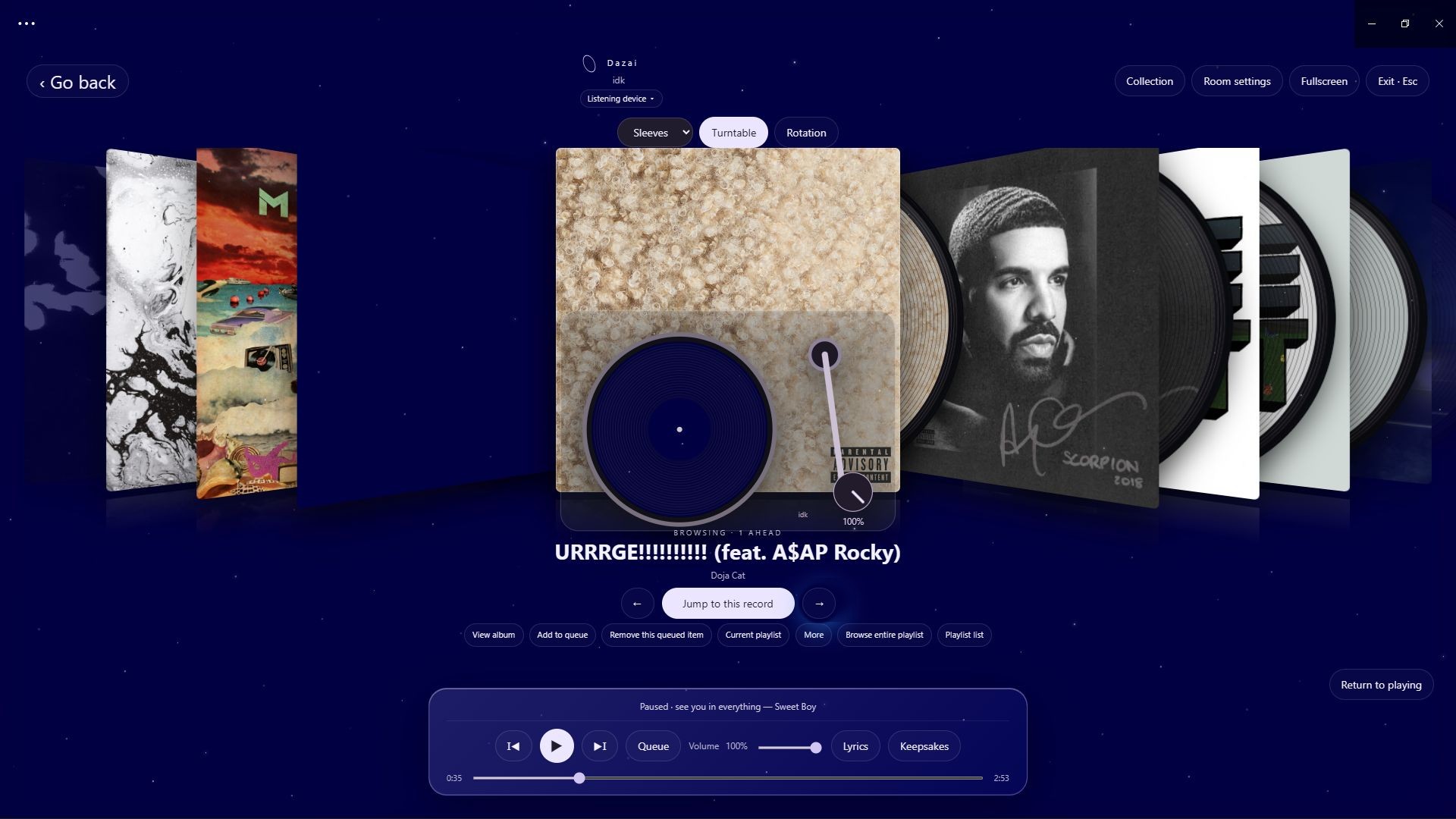
Spotify is a list of rows. Dazai turns it into a room, with records you flick through, a deck that plays them and lyrics that arrive as they are sung.
The listening room
Not a recording. This one is built into the page.
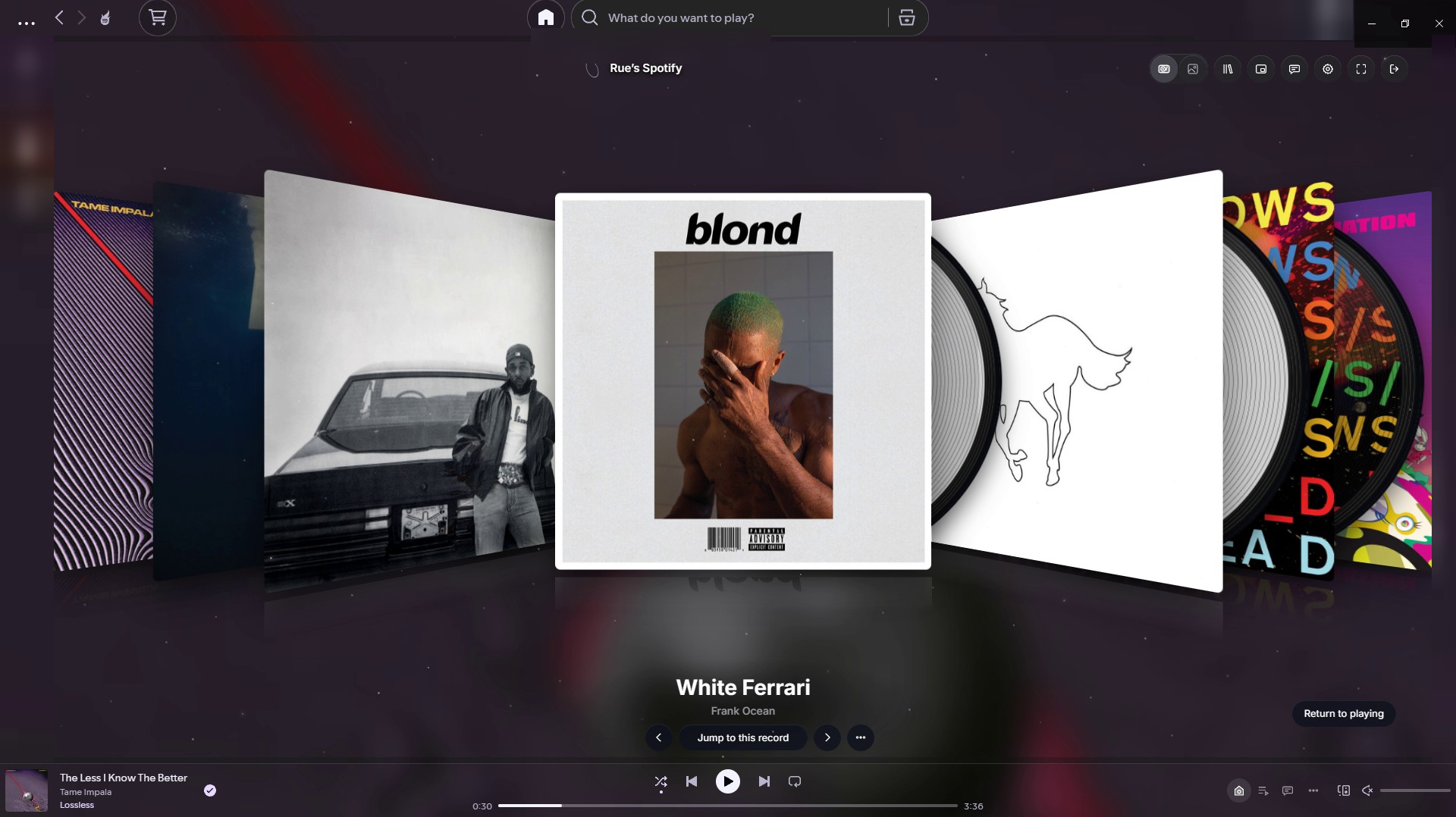
Every record you own, face out.
Flick along the row. They turn as they pass.
Choose one. It slides out of its sleeve and glides to the deck.
The tonearm lowers.
And the room takes its colour from the record.
Lyrics
A word
at a time.
Every word sweeps as it is sung, a held note lifts and glows, and when the singing stops the line breathes until it starts again.
These lines were written for this page. They are not a song. In Dazai, word-by-word lyric timing comes via Spicy Lyrics (community and Apple Music syncs). Lyrics rendering is Dazai's own, built independently.
Your turn
Go on. Put one on.
Drag the row, scroll over a sleeve, or use the arrow keys. Click the one in the middle to play it, then keep browsing while it spins.
The song plays here on the live site, through Spotify.
A recreation built for this page, using the seven records from my own room. Put one on and it plays through Spotify's own player: a 30-second preview, or the whole song if you are logged in to Spotify. Album artwork belongs to its respective rights holders.
A fault I found
The shelf was missing albums.
It only counted Liked Songs, so music I keep in my own playlists never reached my collection. I changed the requirement, the agents worked out the data, and I checked the result myself.
3 of 8 on the shelf
A decision
I threw away
a finished build.
It worked. It was louder, not better. So I reset the direction and added a quiet check every screen now has to pass.
The real thing
Recorded,
not recreated.
Full screen. Watch the bottom edge. Glass controls surface only when the pointer comes close.
The deck. A platter that turns and a tonearm that actually lowers.
Two views. The record and the cover morph into each other.
Artwork first. The glass is monochrome. Colour comes only from the album.
How it was made
I directed it.
I did not hand-write it.
I conceived Dazai, set its design language and wrote the requirements for every release. Three AI engineering agents built it under my direction, and nothing ships until I have tested it myself. Some faults only I caught, like the silent one that switched off 15 animations while every automated check stayed green.
Look
again.
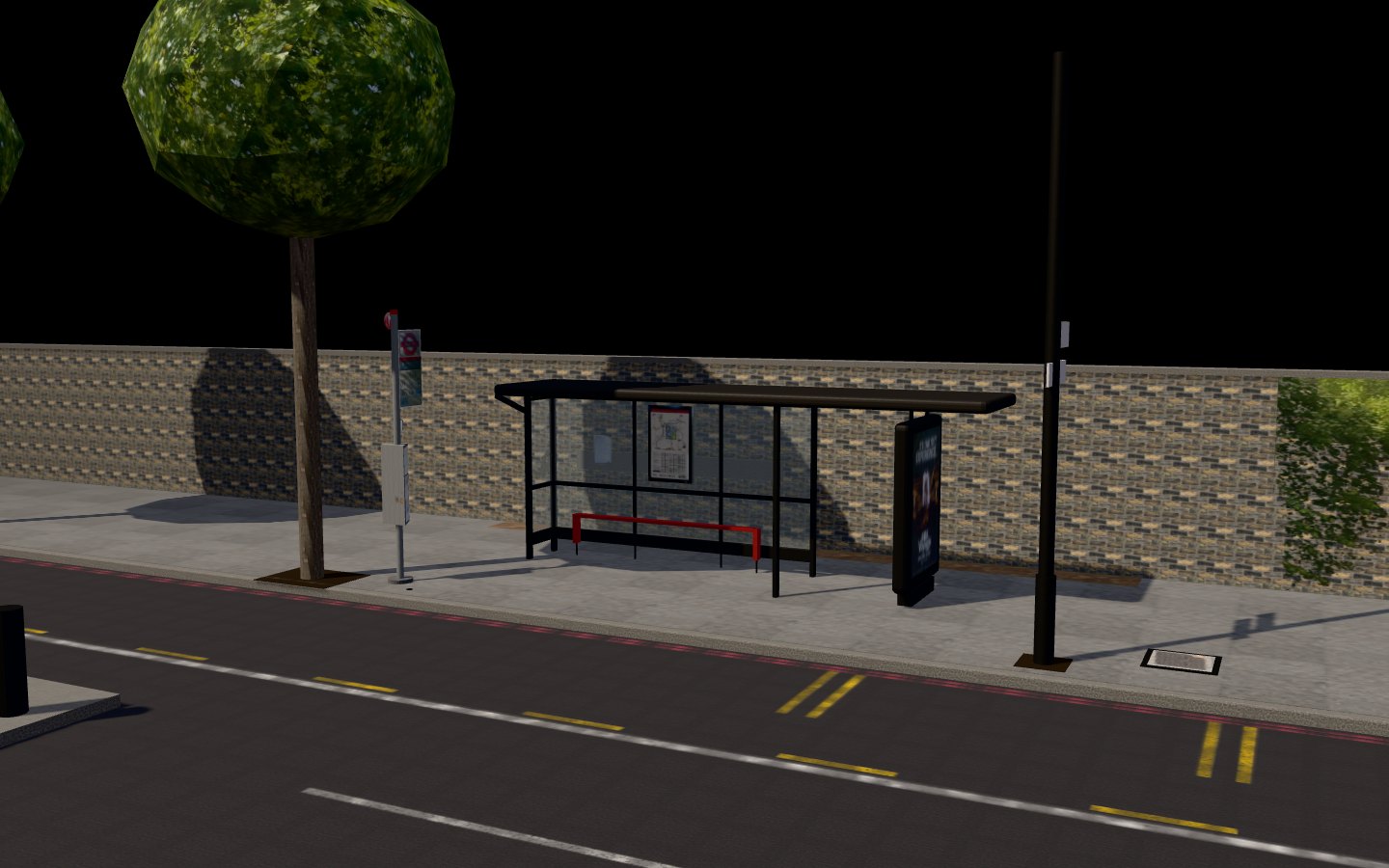
This is the model itself, running in your browser. Keep scrolling and take it apart.
Everyone has stood at a bus stop. Almost nobody has looked at one. Anomaly is a game about noticing, set at a real London stop that I photographed and rebuilt piece by piece.
Where it started
54 photographs.
One visit.
St George's Road, outside the Imperial War Museum. I photographed everything on the stop, and I built the model to sit exactly over those pictures.
Same camera, same position. People and number plates in my photograph are blurred.
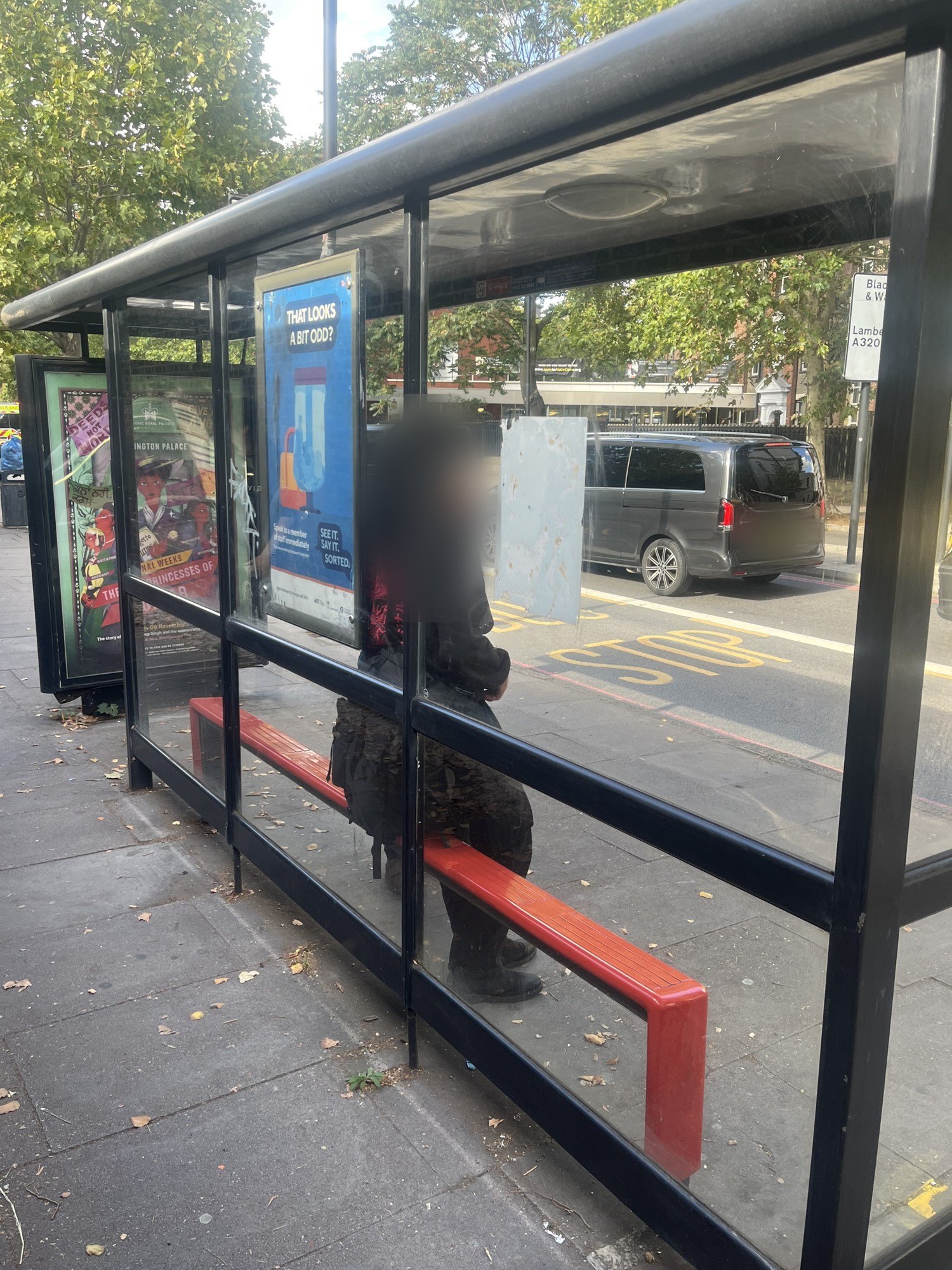
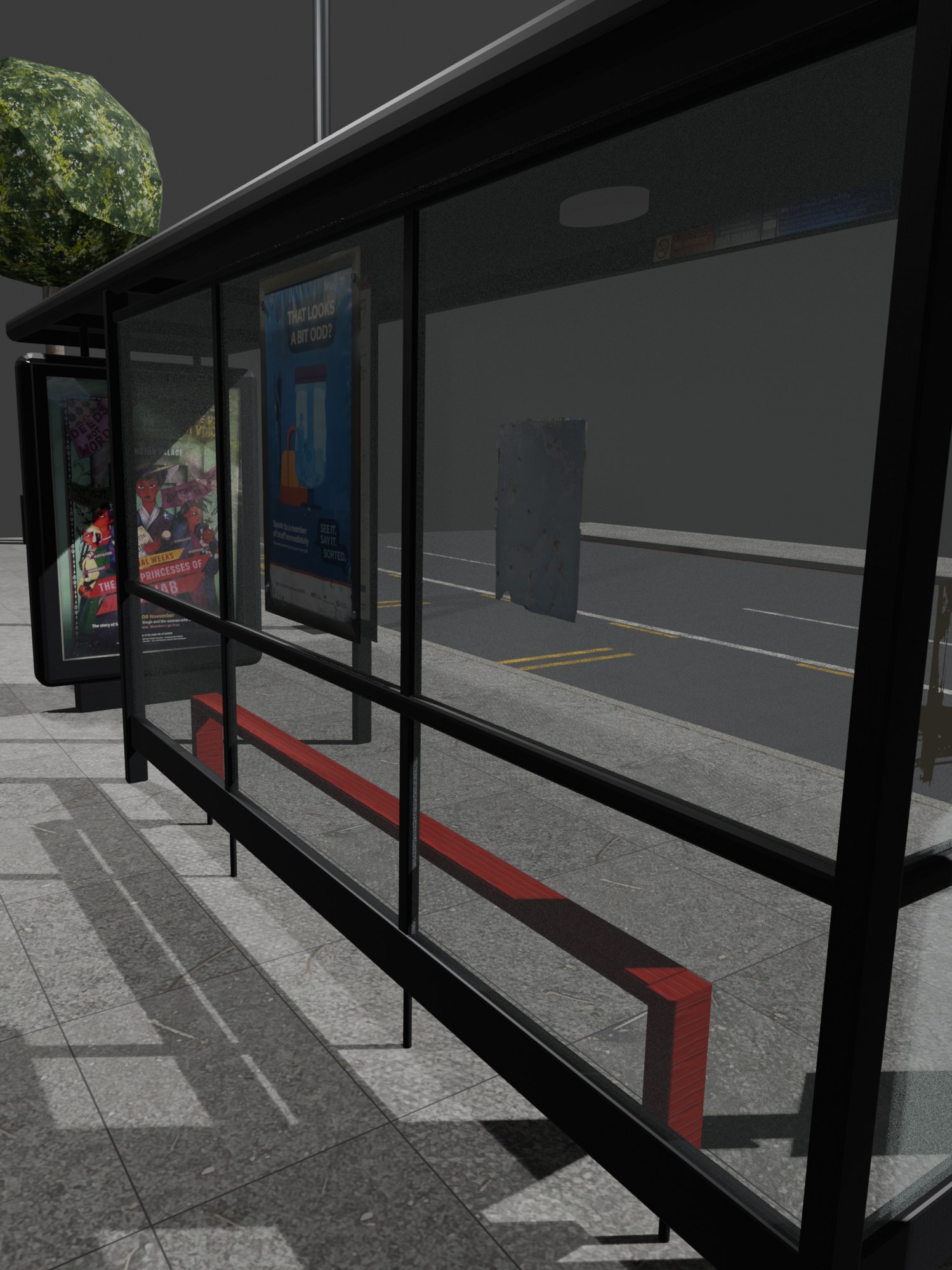 My photograph
The model
The model
Not a video. Every frame of this is drawn as you scroll.
5,744 triangles. Light enough for a game.
Underneath, every surface is plain. Shape came first.
172 objects, each one separate and named.
Then the surfaces. 37 textures cut from my own photographs.
And 72 pieces that can change. Lift one and there is a blank panel behind it.
The game
The same stop.
Again and again.
You wait at the stop for the bus. Each time, the stop is either exactly as it was or wrong in one small way. All you ever do is decide which.
In the tradition of Exit 8, Hospital 666 and Anomaly Exit. The game is in progress in Unity.
Play it
Coming soon.
The game is being built in Unity, on this exact stop. In progress, and due by 28 January 2027.
A fault the render hid
It looked right.
It was not.
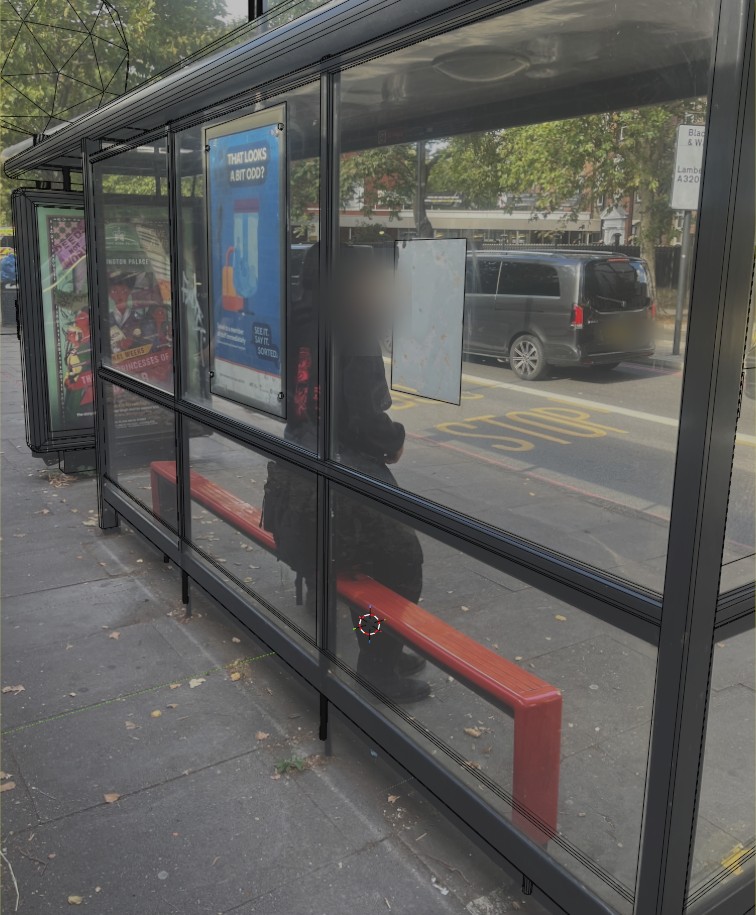
I laid the first build over my photograph, from behind the shelter. The shelter was too deep and the frame did not sit on the real one. It had looked fine in a render. Pull across to see the final model from the same camera.
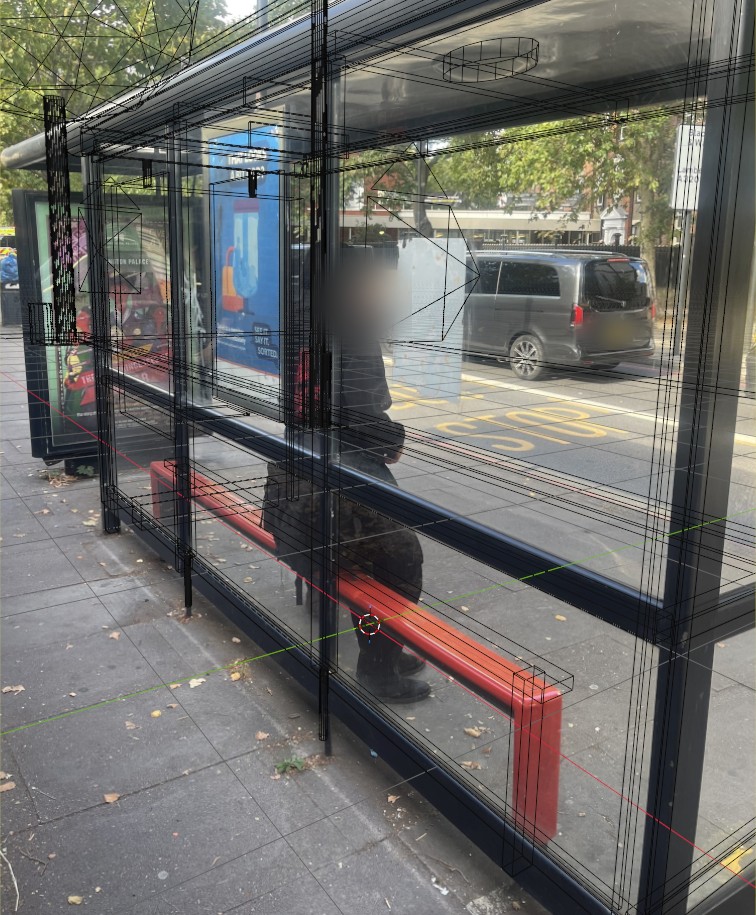
 First build
Final model
The real thing
Out of Blender,
untouched.
The orbit. Rendered in Blender for the hand-in.
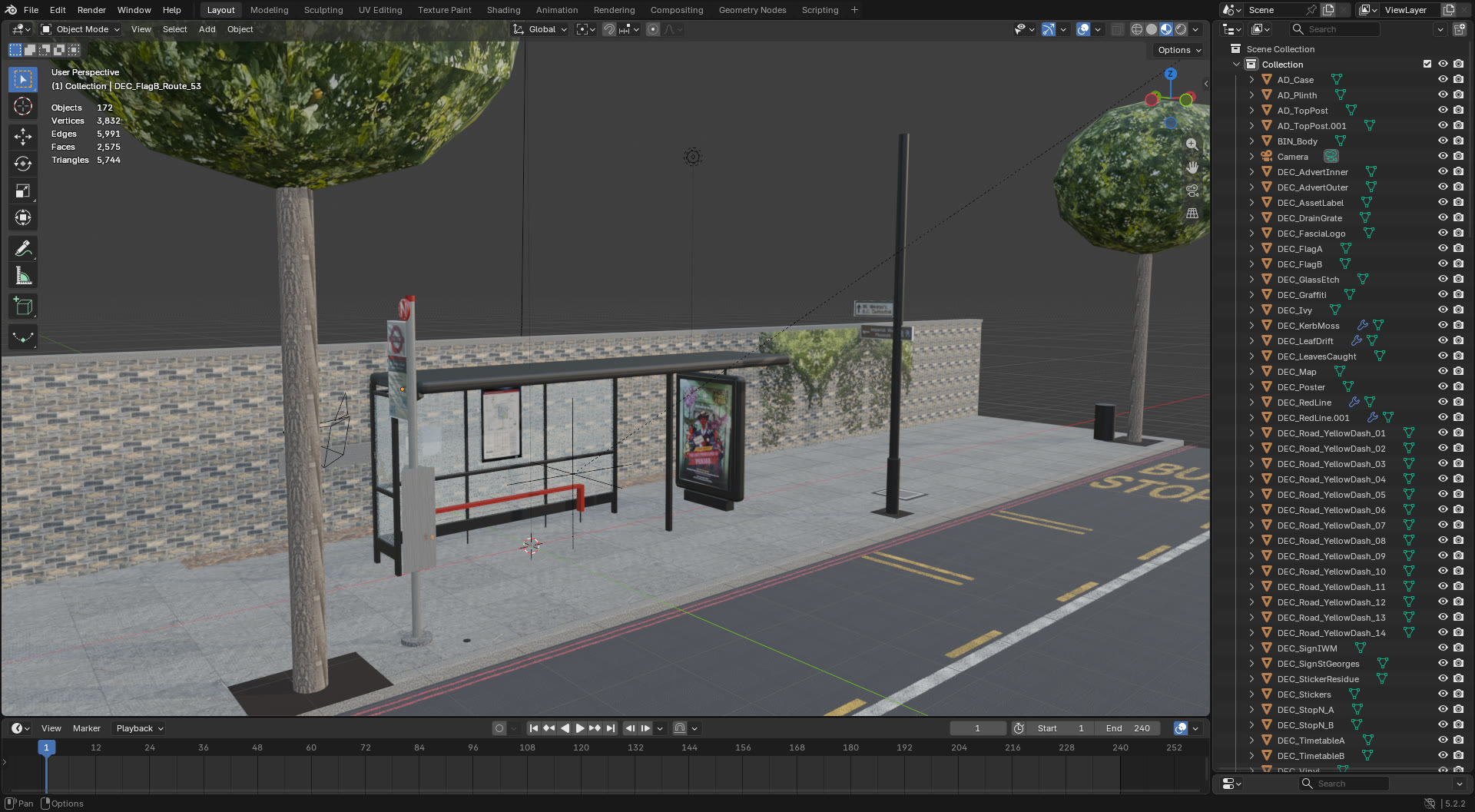
The scene. Every object named, every count on screen.
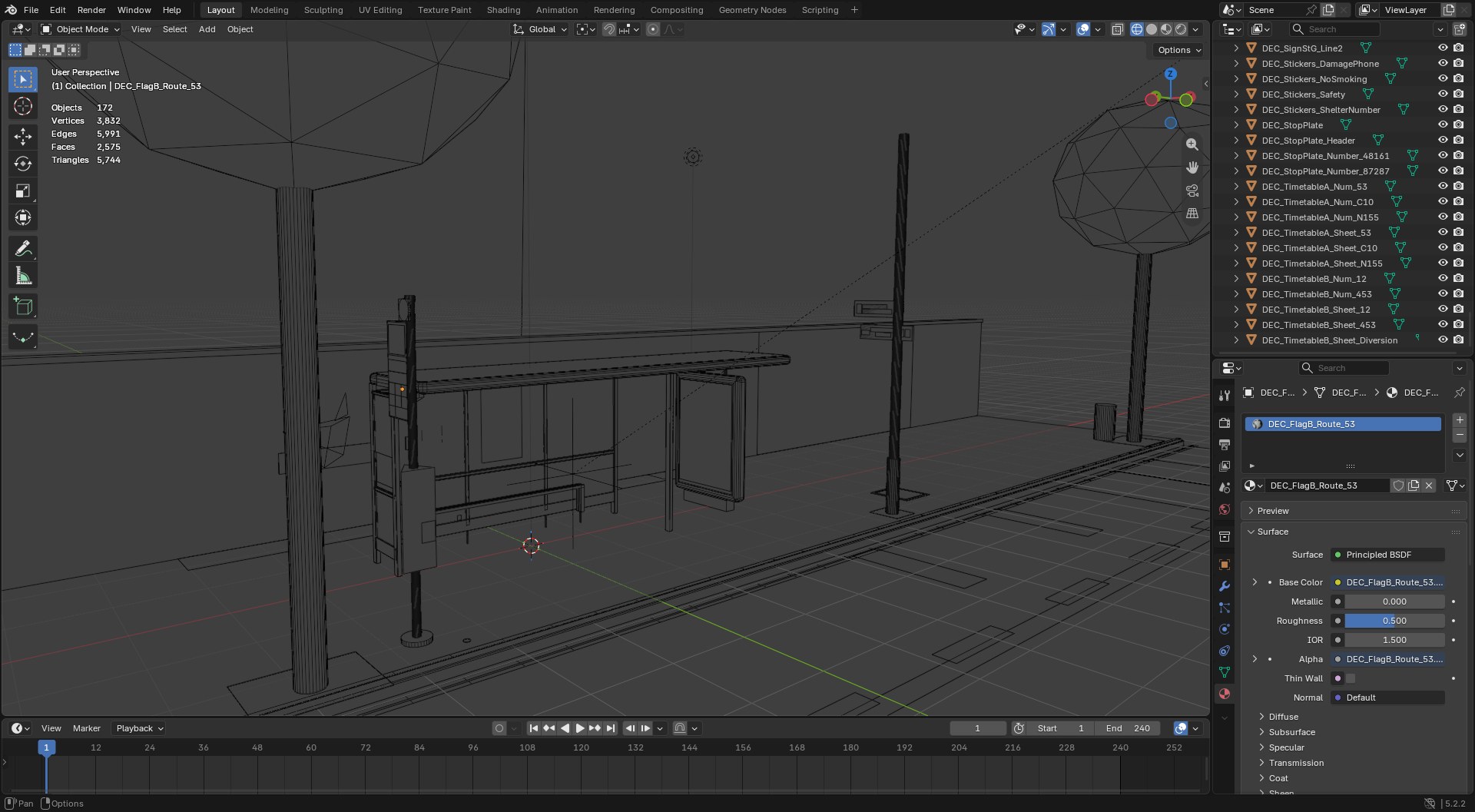
Wireframe. The same mesh you just scrolled through.
How it was made
Built from
what was there.
I photographed the stop, rebuilt it in Blender and designed the game around it. The rule was that everything had to match the real stop and come from my own pictures. My first road markings looked plausible but were not London's layout, so I redrew them from the site photos.